Tesla Ownership in Florida: What Nobody Tells You About Paint
Tesla owners tend to find out the hard way that the brand's factory paint isn't built the same way as most legacy automakers'. It's a fairly well-documented issue at this point - Tesla's paint has a reputation for being thinner and softer than what you'd get on a comparable BMW or Mercedes, which means it chips and scratches more easily under exactly the same driving conditions.
Florida Puts That Weakness to the Test
In Florida, that vulnerability gets tested constantly. Between construction debris on I-95, gravel kicked up on causeways, and daily exposure to intense sun, a Tesla's paint takes a beating faster than most owners expect going in. It's not unusual to see a Model 3 or Model Y with visible front-end chipping within the first year of ownership, especially for owners doing regular highway commutes.
A Well-Understood Fix
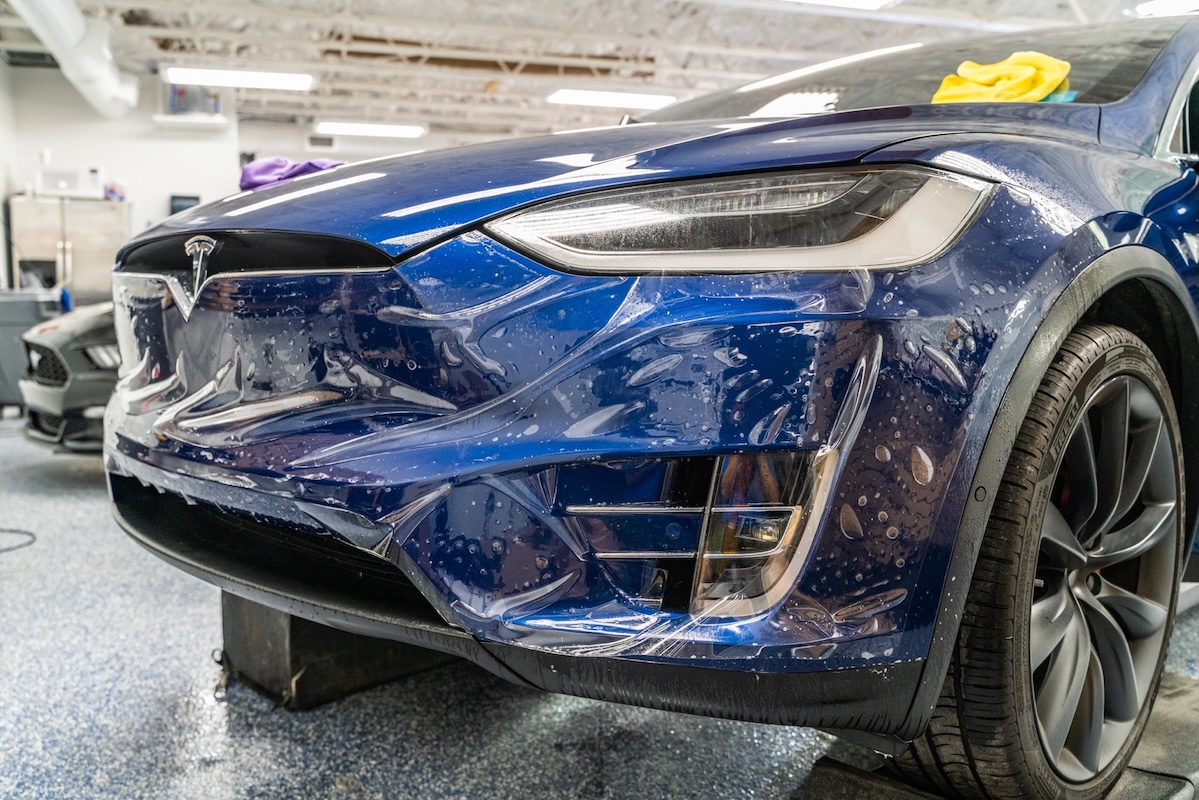
The upside is that this isn't a mystery problem without a solution - it's actually one of the more well-understood use cases for paint protection film. Applying PPF to the front bumper, hood, and mirrors addresses the exact panels that take the most damage, without changing the car's appearance if you go with a clear, high-gloss film. Owners who want a different aesthetic sometimes opt for a matte finish film instead, which protects just as effectively while giving the car a completely different look.
Heat Is the Other Problem Nobody Mentions
Heat management is the other piece Tesla owners in Florida deal with that doesn't get talked about enough. The glass roof on most Tesla models lets in a lot more heat than a traditional roof, and pairing paint protection with quality ceramic window tint makes a noticeable difference in cabin temperature during Miami summers - something that matters given how temperature-sensitive EV battery efficiency can be.
What to Ask Before Booking
For anyone shopping around, it's worth specifically asking whether a shop has experience with EVs and Tesla's particular paint characteristics - not every detailer treats a Tesla the same way they'd treat a traditional combustion car, and the difference shows up in how the film is cut and applied around the more minimalist body panels.